
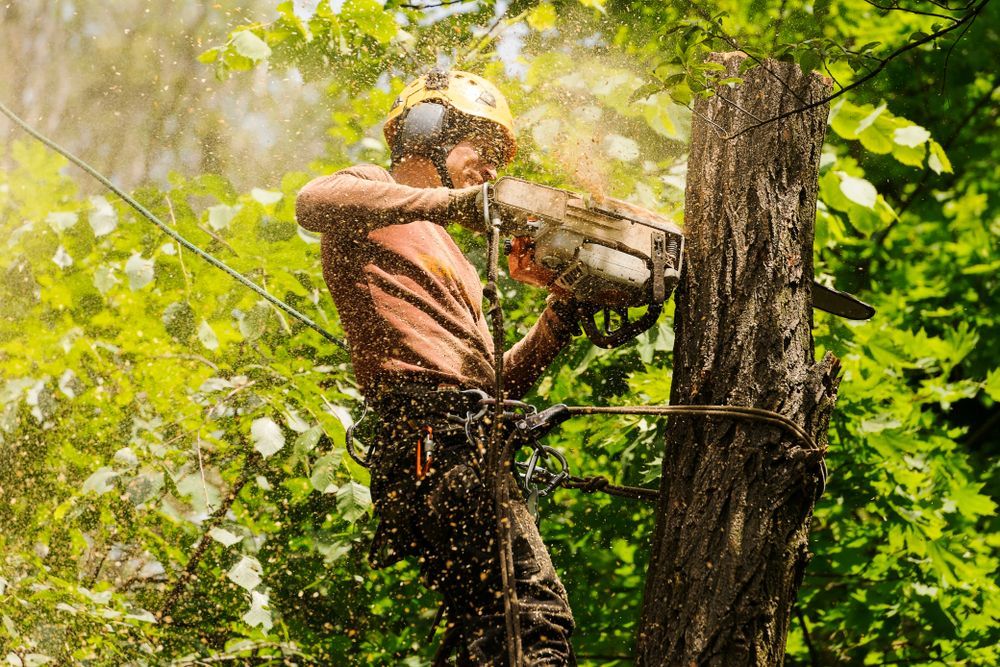
Dead and Hazard Trees Removed Before Failure
Tree removal in Nacogdoches for mature, dead, or structurally compromised trees that pose a risk to structures or need to come down before land use can proceed
East Texas properties carry some of the densest mature timber in the state—established pines and hardwoods that were standing long before the structures around them were built. When those trees die, lean, or drop major limbs, the question shifts from whether to remove them to how to do it without damaging what's nearby. Get-R-Done Land Services handles tree removal in Nacogdoches with Blaine on site for every job, assessing each tree personally before the crew begins and staying through completion. That single-operator accountability matters when removal involves trees close to rooflines, driveways, or utility lines.
The removal process starts with an on-site assessment: Blaine evaluates lean direction, root condition, canopy balance, and proximity to structures to determine the fall direction and cut sequence. The crew then falls the tree in sections where necessary, cuts the material into manageable pieces, and hauls everything off the property. Stumps are ground or removed as part of the same job, and brush is either hauled or mulched depending on what the site requires. Any additional land clearing or stump work identified during removal is handled at no extra charge—the job doesn't stop at the tree that was originally quoted if related work is needed to leave the property in usable condition.
Schedule an on-site evaluation with Blaine to assess the specific trees you need removed and get a quote based on their actual condition and location.
How Tree Condition and Placement Affect the Removal Approach
Mature pines near Lufkin and Garrison frequently develop root compromise before the canopy shows obvious distress—a tree that looks structurally sound from the ground may have significant basal rot or root damage that changes how it can be safely felled. Thirty years of operating removal equipment in East Texas gives Blaine the reference points to identify these conditions during the assessment walk, which directly affects whether a tree can be felled in one piece or needs to be sectioned from the top down to control where the material lands. That decision is made before any cutting starts, not discovered mid-job when options become limited.
After a tree is removed and the stump is ground, the visible result is a lot with the obstruction gone and the ground clear to the surface—no stump crown, no debris pile, and no log sections left on the property waiting for a secondary haul. If the removal was for a development project, the lot is in a condition where grading or construction equipment can move through without navigating around leftover material. If it was a hazard tree near a structure, the structure's exposure to that specific risk has been physically eliminated.
Tree removal scope varies depending on the number of trees, their diameter and height, proximity to structures or utility lines, and whether stump grinding is needed at grade or the stump can be left below the surface. Blaine quotes all of this on site rather than by phone description, because the difference between a straightforward removal and a technically demanding one is rarely obvious without seeing the tree in its actual position relative to what's around it.
Common Questions About the Tree Removal Process
These questions address how tree removal is actually performed—the assessment steps, how proximity to structures affects the approach, and what the property looks like when the job is done. Each answer reflects the conditions common on Nacogdoches-area properties with established timber.
What does Blaine assess during the on-site tree evaluation before any cutting begins?
The assessment covers lean direction, visible root and basal condition, canopy distribution, and proximity to structures or fence lines—these factors together determine the fall sequence and whether the tree can be felled whole or must be sectioned from the top to control the drop zone.
How is a tree removed safely when it's close to a building or fence?
Trees in tight proximity to structures are sectioned from the crown downward rather than felled at the base—each section is cut and lowered or directed to fall away from the structure, which requires more time but prevents the canopy from contacting what's nearby during the fall.
What happens to the stump after the tree is removed?
Stumps are ground at grade level using a stump grinder as part of the removal job, leaving the surface clear without a protruding crown that would obstruct mowing, grading, or foot traffic across the area where the tree stood.
Why do dead pines in East Texas sometimes require a different removal approach than living trees?
Dead pines lose structural integrity at branch attachment points and in the upper trunk before the lower section shows visible decay; this makes directional felling less predictable than with a living tree, and sectioning from the top down is often the correct approach even when the base appears solid.
What work is included if additional stumps or brush are found during the removal job?
If clearing around a removed tree reveals additional stumps or brush that need to be addressed for the lot to be usable, that work is handled at the same time at no extra charge rather than quoted as a separate return visit.
Get-R-Done Land Services also performs tree removal in Lufkin, Timpson, Garrison, Etoile, and St. Augustine. To arrange a site visit and get a direct assessment of the trees on your property, call (936) 615-8792 and speak with Blaine about what you're working with.