
Brush Processed Without Piles Left Behind
Forestry mulching in Nacogdoches for wooded and overgrown lots where haul-off is impractical and the ground needs to be usable immediately after clearing
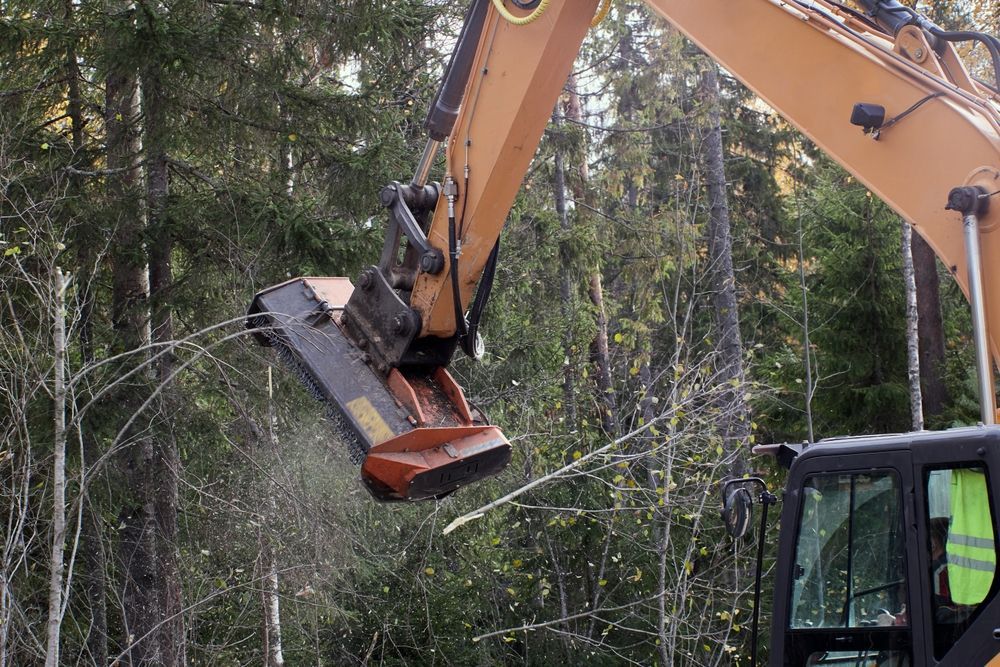
Thick brush on a wooded East Texas lot creates a specific problem that standard clearing doesn't solve cleanly: cut material has to go somewhere, and hauling it requires multiple loads, additional cost, and a return trip before the ground is actually usable. Get-R-Done Land Services addresses this directly through forestry mulching, which processes standing trees and brush into fine mulch material in a single pass—no debris piles, no haul-off scheduling, no waiting for the lot to be cleared twice. Blaine sizes the job on arrival and the equipment moves through the site until the ground is at grade and ready to build or use.
The mulching equipment grinds standing vegetation down to ground level in one operation, which means stumps, brush, and trees are handled simultaneously rather than sequenced across separate mobilizations. The resulting mulch stays on site as ground cover that suppresses future growth and stabilizes the surface, or it gets spread to specific areas as requested. Any site work that comes up beyond the mulching scope—fill work, stray debris, edge cleanup—is included at no extra charge.
Arrange an on-site review with Blaine to determine whether forestry mulching or a combination approach fits your lot's conditions and intended use.
Why Mulching Outperforms Cut-and-Haul on Wooded Properties
Wooded lots in the Nacogdoches area—particularly in and around Garrison and Diboll—often carry decades of layered growth: mature pines, dense underbrush, and standing deadwood that's accumulated over time into a tangled mass that standard cutting equipment can process but can't dispose of in one pass. Forestry mulching machinery handles the full cycle—cut, chip, grind, and spread—without separating those steps into multiple visits or requiring a debris staging area on adjacent property. That single-operation approach is particularly valuable on lots where access for haul trucks is limited or where the owner wants the ground walkable and ready for stakes or grading immediately after the crew leaves.
After mulching, the visible change is immediate: where overgrowth stood, the ground is open and level, with a layer of fine wood material covering the surface rather than exposed bare soil or debris windrows. That mulch layer isn't a byproduct to clean up—it functions as erosion control and weed suppression, reducing the ground maintenance burden in the weeks following the clearing. Get-R-Done Land Services brings thirty years of East Texas equipment operation to each job, which informs how the mulching pass is sequenced to protect the topsoil while achieving a consistent finished grade.
Forestry mulching is not always the right tool for every situation—lots where all wood material needs to be removed entirely, or where the client wants a bare mineral soil surface for slab pours, may require a different approach or a combined method. Blaine assesses this on arrival and adjusts accordingly rather than applying a fixed process regardless of what the property actually needs.
What Property Owners Ask About Forestry Mulching
The questions below cover how forestry mulching works in practice—what the equipment does, what remains on the property afterward, and how the process differs from conventional clearing. Properties in this part of East Texas vary in timber density and intended use, so the answers reflect how those variables actually shape the job.
What size trees can forestry mulching equipment handle?
Most forestry mulching equipment processes trees up to eight to twelve inches in diameter in a single pass; larger timber may require felling first before the mulcher follows through, and Blaine confirms which approach applies during the on-site assessment.
How is the mulch material left on the property after the job?
The mulch is spread evenly across the cleared area to a consistent depth, which stabilizes the surface and discourages regrowth—if a specific area needs more coverage or a section needs to be cleared of mulch for a foundation, that adjustment is made before the crew leaves.
Why does mulching eliminate haul-off when standard clearing doesn't?
Conventional clearing cuts material and leaves it in piles that require separate loading, transport, and disposal; forestry mulching grinds that same material in place, so the volume that would have needed multiple truck loads is reduced to a thin ground layer that stays on site.
What happens to stumps during the forestry mulching process?
The mulching head grinds stumps at or below grade level in the same pass as the brush and standing trees, so no separate stump grinding mobilization is needed afterward and no stump tops remain above the finished surface.
How soon can the ground be used for building or grading after mulching?
Because there are no debris piles to remove and the surface is left at grade, surveying, staking, and equipment access can begin as soon as the mulching crew finishes—no additional site prep step is required between mulching and the next phase of development.
Get-R-Done Land Services also performs forestry mulching in Lufkin, Timpson, Garrison, Etoile, and St. Augustine. To discuss your property's specific conditions and get a direct quote, call (936) 615-8792 and schedule a site visit with Blaine.