
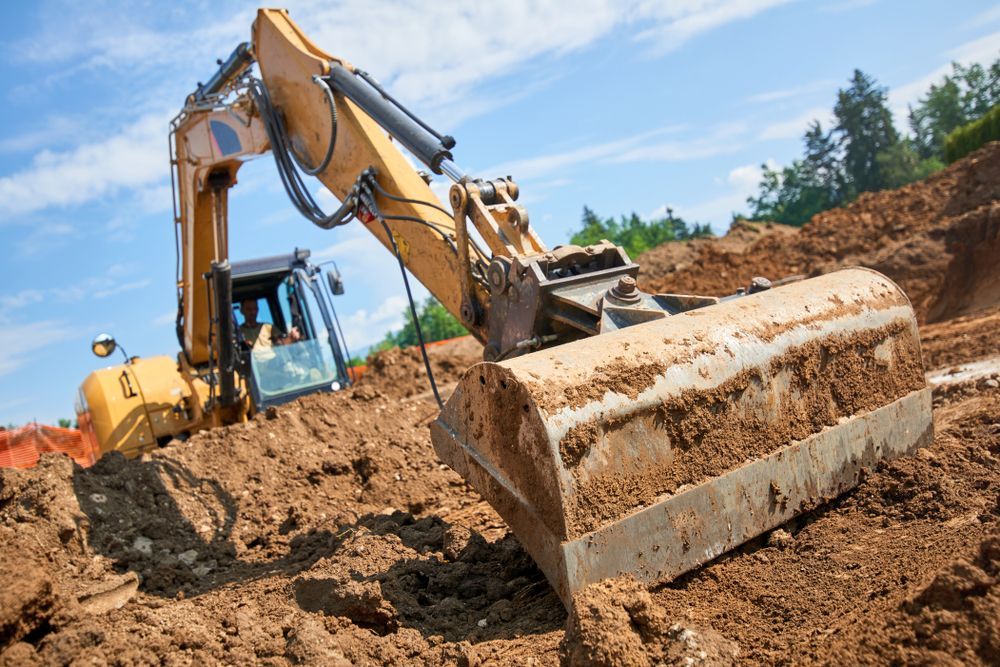
Grade Set Correctly Before Construction Begins
Dirt work and grading in Nacogdoches for lots that need material moved, compacted, or finished to spec before building or development can proceed
Establishing correct grade on a lot before construction is the difference between a building pad that drains properly and one that holds water against a foundation or driveway edge. Get-R-Done Land Services handles dirt work and grading in Nacogdoches, arriving with grading and compacting equipment sized for the job. Blaine assesses the lot on arrival, establishes the grade requirements, and moves or compacts material to match what the next construction phase actually needs—not a rough approximation, but a finished surface ready for the following trade.
The process begins with lot assessment: identifying low spots, locating stockpiled material that needs to be redistributed, and confirming the finished elevation before the first blade pass. Material is sourced, placed, and compacted to spec in sequence. If fill work, regrading of a problem drainage area, or moving stockpiled dirt surfaces during the job, that work is included at no additional charge rather than flagged as a change order. The crew stays until the surface is finished, not until a fixed number of passes is complete.
Request a free estimate by scheduling Blaine to walk your lot and confirm the grading scope before any equipment mobilizes.
What Proper Site Grading Actually Requires
Properties in the Nacogdoches area around Huntington and Center frequently present mixed grading challenges: natural slope variations, areas where prior clearing or construction left uneven fill, and low-lying sections where water pools without a deliberate drainage path built into the grade. Addressing these conditions requires both the right equipment and a clear reading of the finished elevation before work starts. Grading that skips the assessment step produces surfaces that look level but direct drainage toward structures rather than away from them—a problem that typically shows up after the first heavy use period, when correcting it requires redoing work that should have been right the first time.
After dirt work and grading are complete, the observable changes are straightforward: the surface holds its shape under foot and equipment traffic, water moves toward the intended drainage direction rather than pooling at low points, and the lot is in a condition where foundation crews, paving contractors, or utility installers can proceed without a secondary site prep step. Get-R-Done Land Services carries thirty years of heavy equipment operation into every grading job, and that experience is applied to compaction sequencing, material placement, and finished elevation verification before the crew leaves.
Dirt work scopes vary based on what the lot presents—some jobs involve moving existing material and no import is needed, while others require sourced fill to bring a low section to grade. Blaine determines which applies during the on-site assessment, so the quote reflects actual material and equipment requirements rather than a standard line-item estimate built without seeing the property.
Answers About How the Grading Work Is Done
The questions below address the grading and dirt work process specifically—how grade is established, what compaction involves, and how site conditions affect the approach. Lot conditions in this part of East Texas vary enough that the answers are framed around the decisions that get made during actual site work rather than generic descriptions.
How is the finished grade established before grading equipment starts moving material?
Blaine reads the lot's natural elevation, identifies the drainage direction required for the intended use, and sets grade stakes or references before the first pass—this step prevents the common error of grading to visual level rather than functional drainage slope.
What does compaction involve and why does it matter before building?
Compaction uses a dedicated compactor to press fill or moved material into a stable, load-bearing surface; skipping or underperforming this step produces a surface that settles unevenly after structures or paving are placed, which requires corrective rework that costs significantly more than proper compaction upfront.
When does a lot need imported fill material versus redistribution of what's already there?
If the lot has enough material at high points to fill low areas, redistribution handles the grade; if the lot is uniformly low or has a significant volume deficit, fill material is sourced and imported—this is determined during the on-site assessment, not assumed from a description of the property.
What happens when additional grading problems are found during the job?
If a drainage problem area, a buried low spot, or stockpiled material that needs moving surfaces during the job, that work is handled as part of the same mobilization at no additional charge rather than scheduled as a separate visit.
How does a finished graded lot differ visibly from a rough-cut or unfinished surface?
A properly finished graded surface has consistent slope without abrupt transitions, holds its elevation under equipment weight without rutting, and shows a clean break at drainage edges—conditions that a rough-cut surface won't meet and that directly affect whether the next trade can proceed without additional prep.
Get-R-Done Land Services also performs dirt work and grading in Lufkin, Timpson, Garrison, Etoile, and St. Augustine. To schedule a free on-site estimate, call (936) 615-8792 and speak with Blaine directly about your lot's grading requirements.